CAUCE 02
Judging a book by its cover
Image and text.
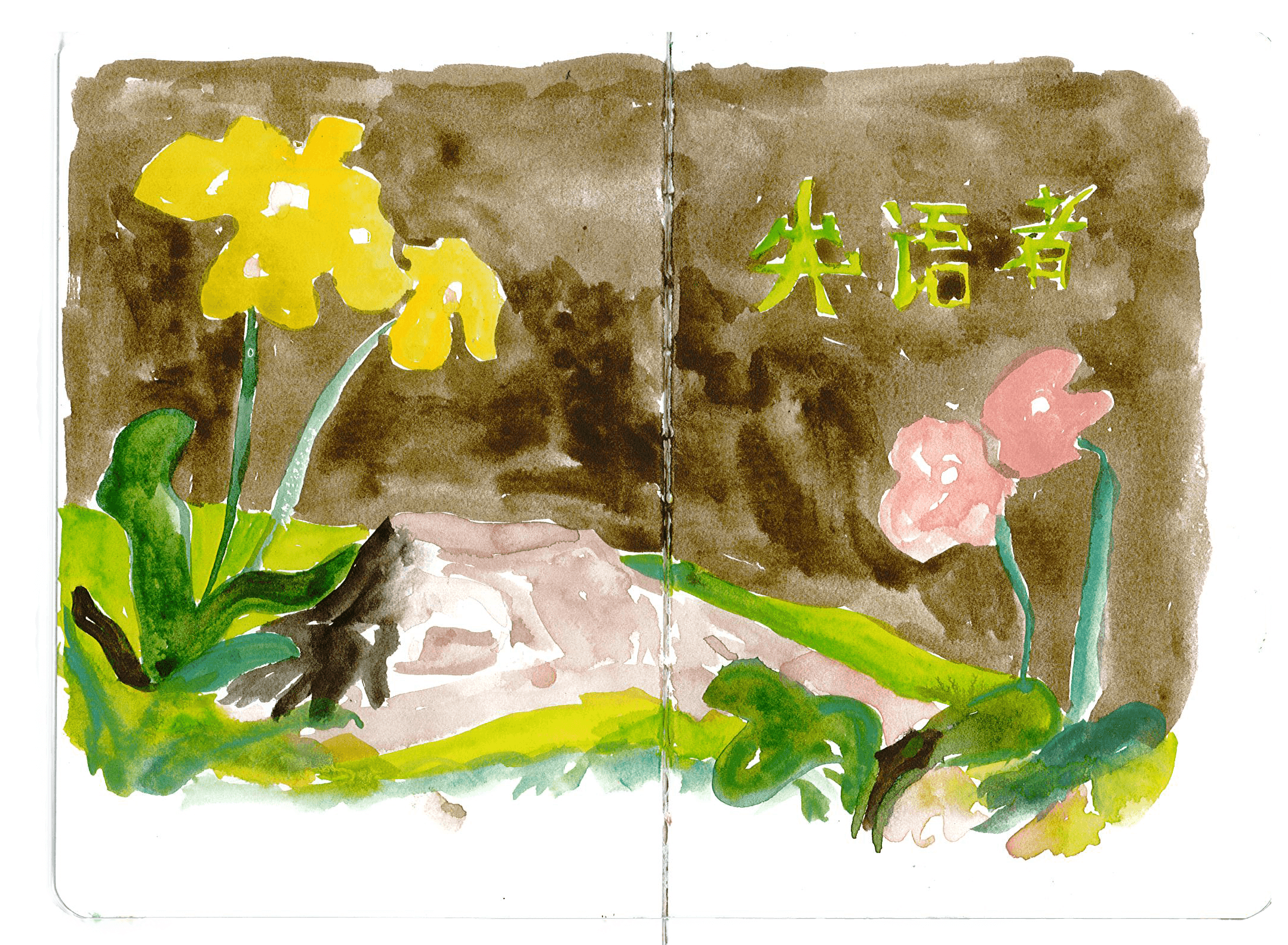
I walk through Chengdu, along a commercial area of shopping malls, clothing shops, and food stalls. It rains, and the street is full of transparent umbrellas. On a corner, two boys cross with a robot dog following in their footsteps; it seems to wear a red cap and a tiny backpack. On the huge 3D screen at the corner, a panda appears among orange flowers and then escapes from the building.
So much rain falls that I decide to take refuge in a bookshop.
Faced with the silence of a language I do not understand, I cannot decipher either titles or authors. I find a few with English titles, but the rest of the book is entirely in Chinese. I find myself looking at covers, as I do when I get lost in any children’s section looking at the drawings. I walk every aisle this way, stopping at the fiction shelves.
It is probably professional deformation, but I have the impression that the cover designs in this section mostly use painting rather than another resource such as photography. The covers are atmospheric, with few elements; Chinese characters are gestural or pictorial, turning the title into an image.
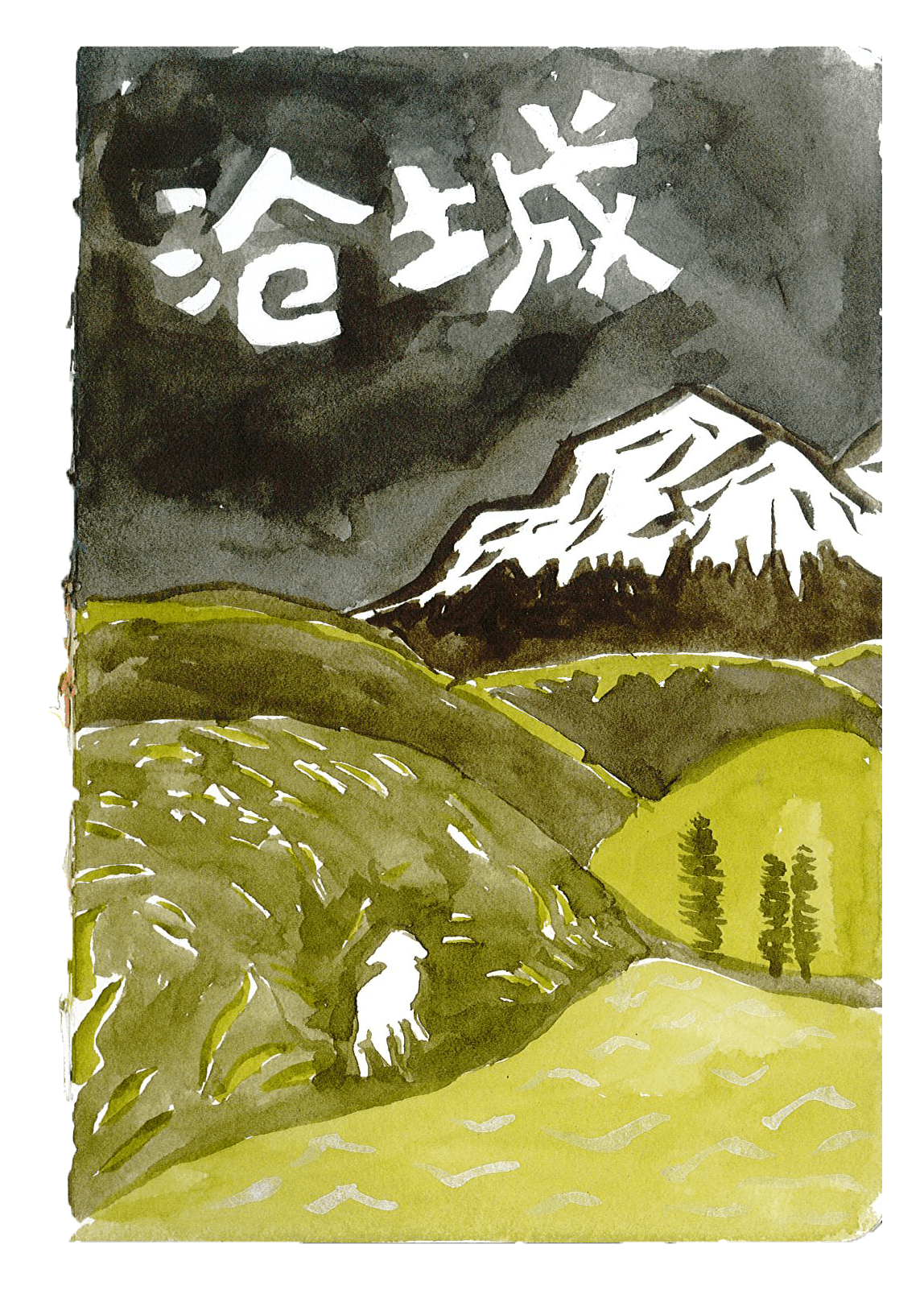
The question of writing and image leaves me lost. Writing in Chinese is also drawing. There is a very blurred line between seeing and reading, or writing and painting. The same tools are used: brushes and paper. A painting can be a word; a huge character, framed and hung on a wall—is it painting or poetry?
I entertain myself by translating the covers that catch my attention, to see whether I recognize any of them.
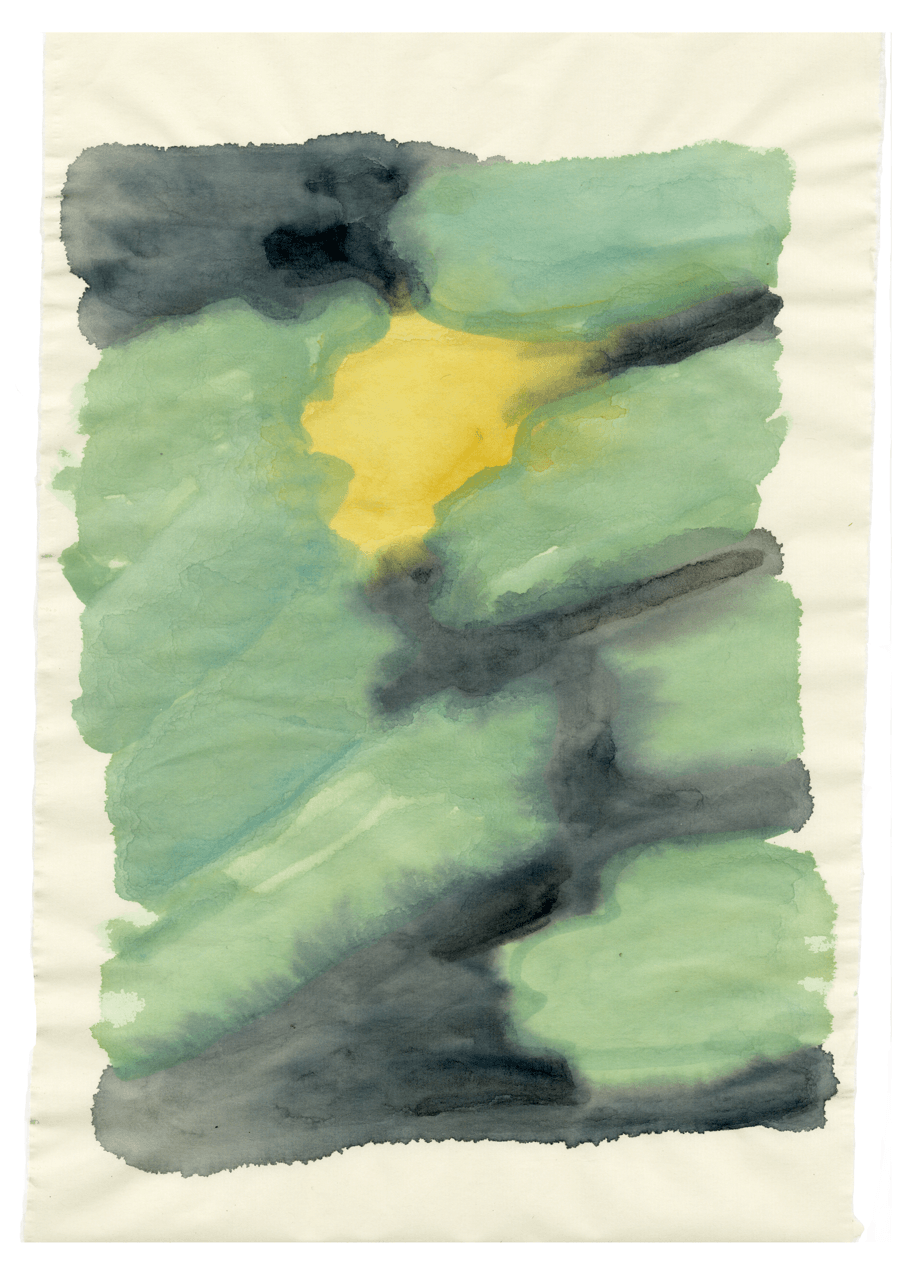
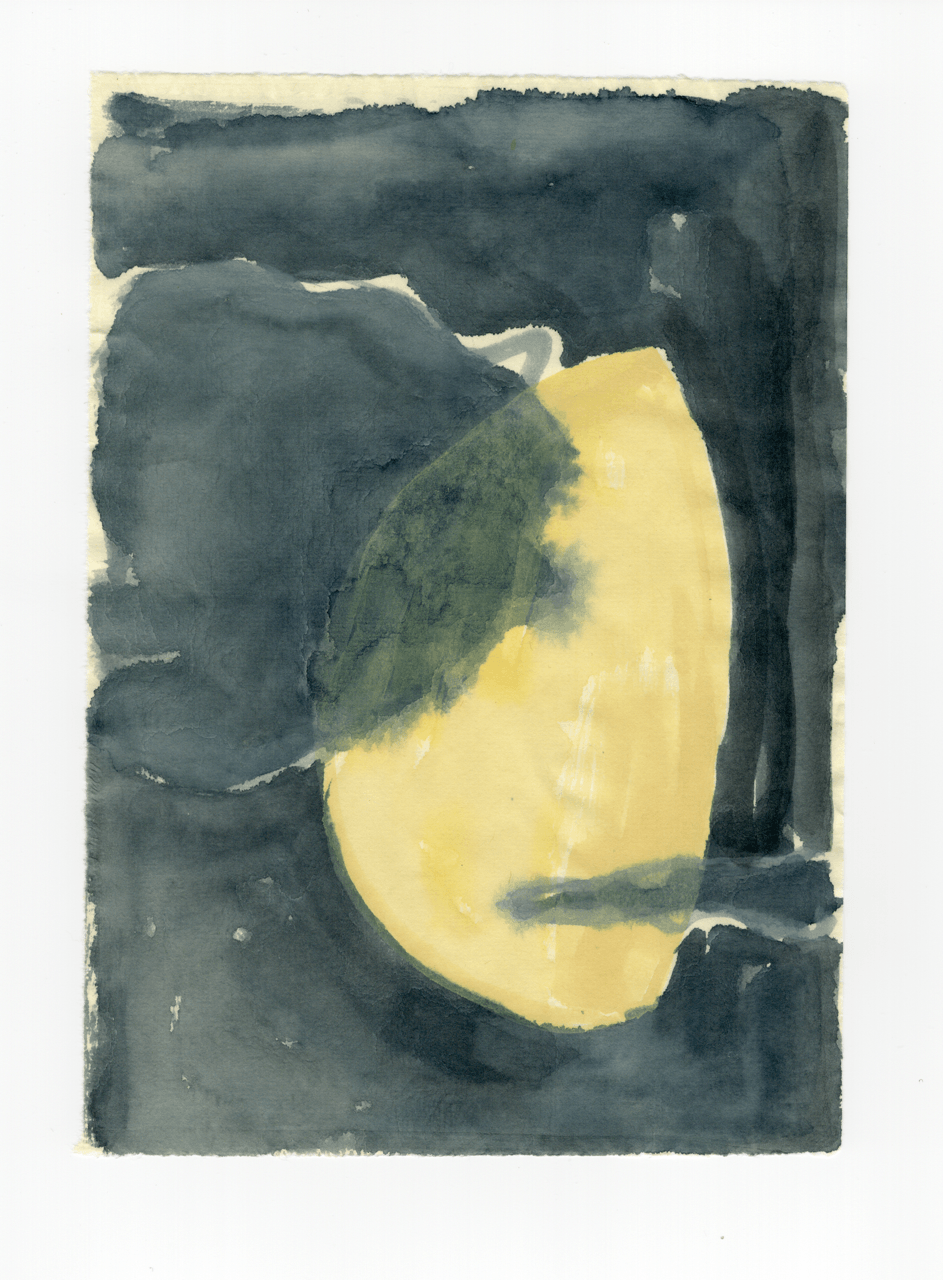
I take photographs. When I return to my base, I paint them. Some go into the sketchbook I carry with me; others I work on rice paper I bought in Beijing. I like that it allows only one stroke, one mark: the image opens up. These are the paintings that accompany this note.
Many of the covers I choose turn out to be by a Chinese author I do not know: Eileen Chang.
I think that if I liked her covers, I might try reading one of her books. I look online for a book by her in Spanish. There are only two. The one I want to read, Rumors, is only in English. I cannot get hold of it, and I get distracted reading about her life.
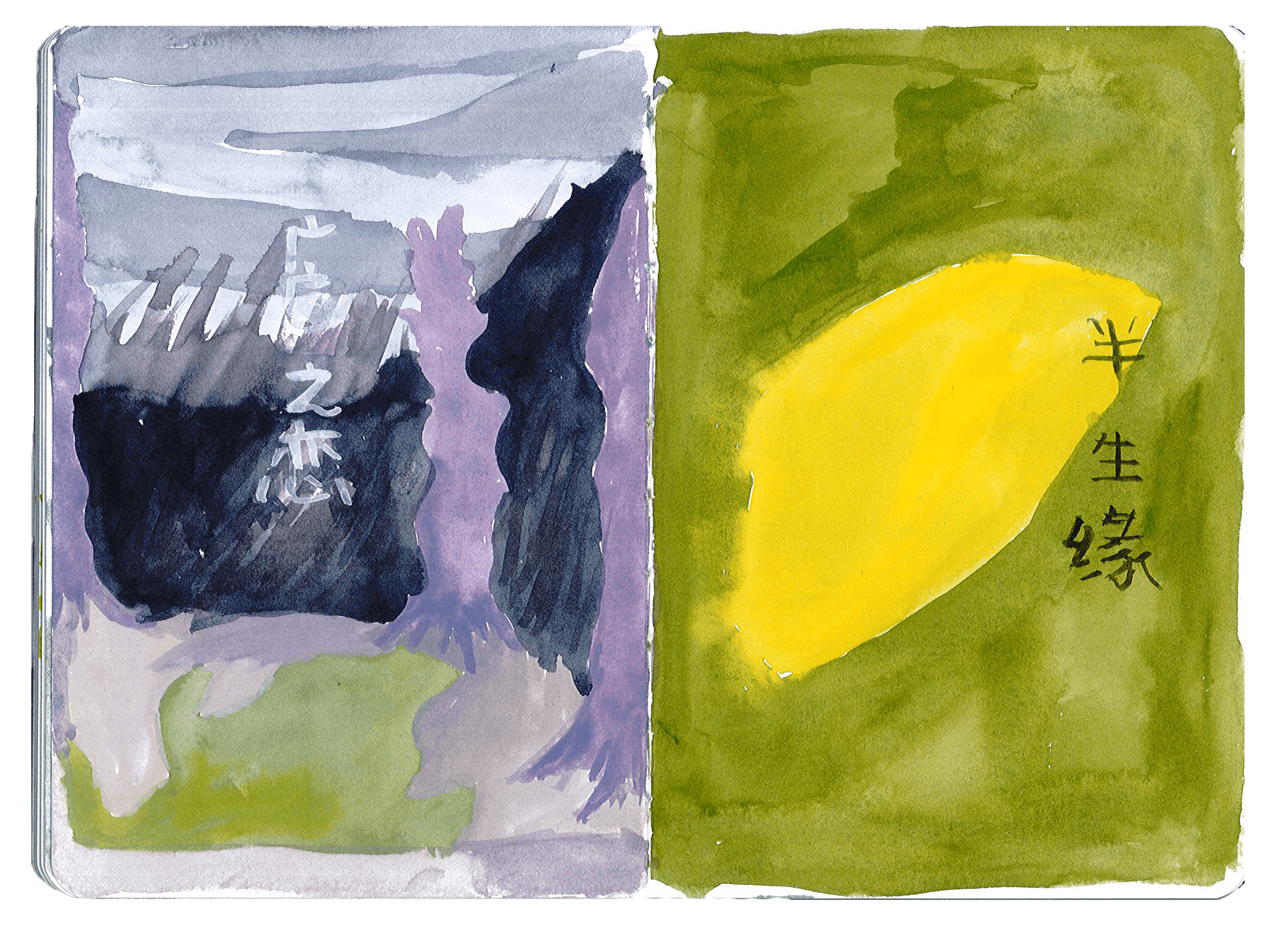
On the left, Hiroshima, My Love (廣島之戀), Marguerite Duras, Shanghai Translation Publishing House (上海译文出版社), paperback edition.
Born into a well-to-do family in Shanghai, she lived with her father, who was addicted to opium, until she escaped to Hong Kong to live with her mother. There she studied literature or English at university. She became one of China’s best-known writers in the 1940s, narrating everyday stories amid tension and war.
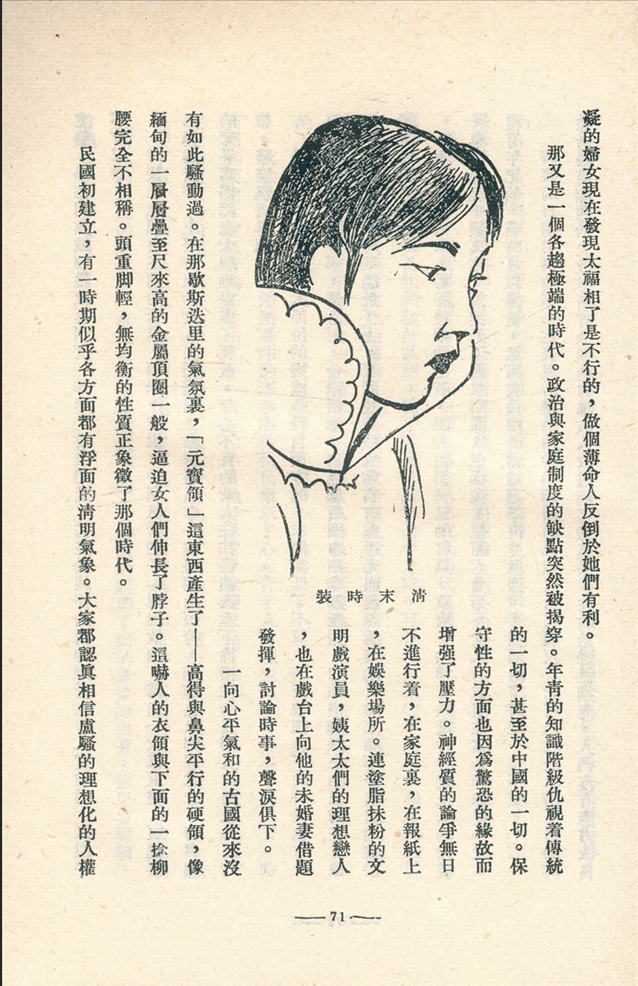
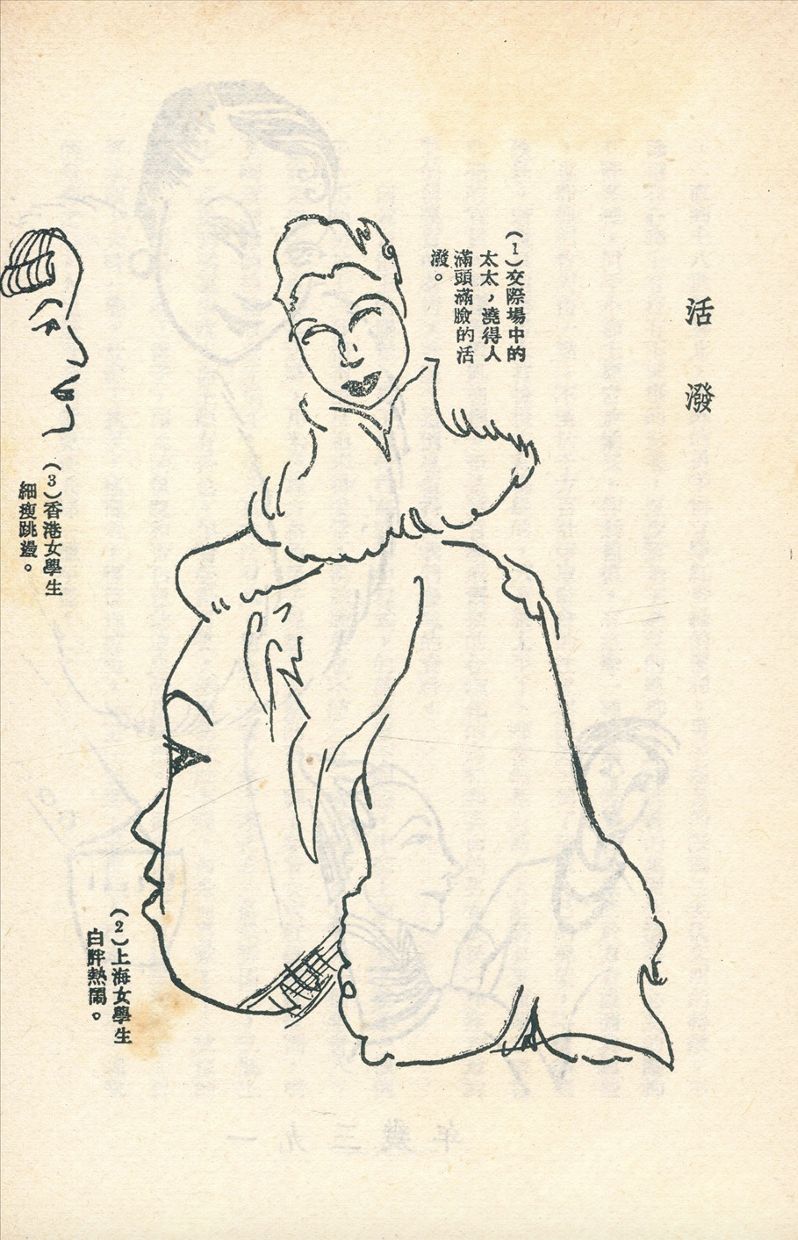
Eileen Chang turned out to be not only a writer but also a draughtswoman. She designed the covers of her own books; I found it curious to encounter an author who cared so much about how her book would look.
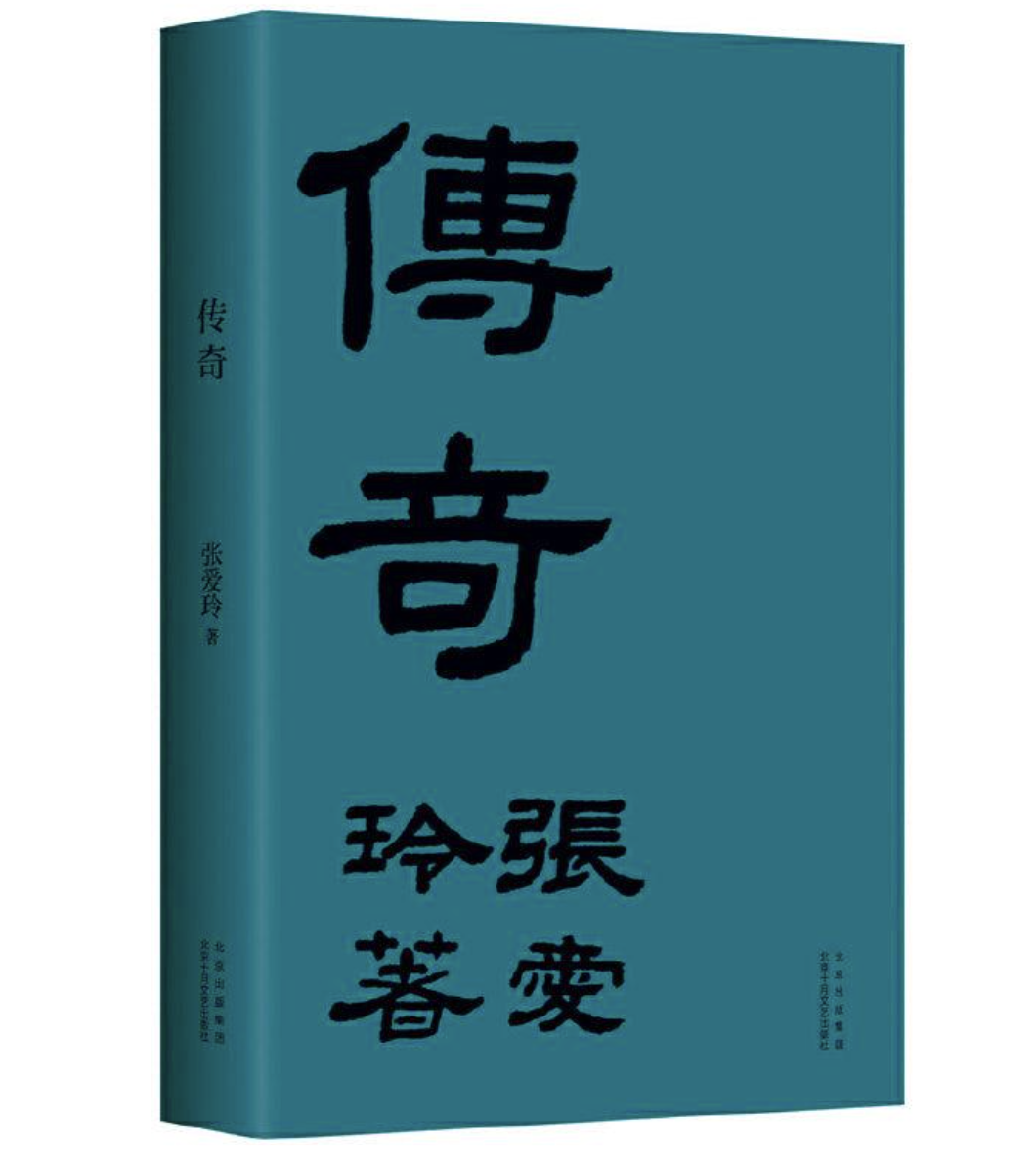
She designed her first book, Legend, a collection of short stories and novellas, published by Shanghai Magazine in August 1944. Eileen wanted it to stand out among the books on the new-releases table, so she designed it simply: deep blue with black lettering, a bold, striking title commissioned from the celebrated calligrapher Deng Sanmu.
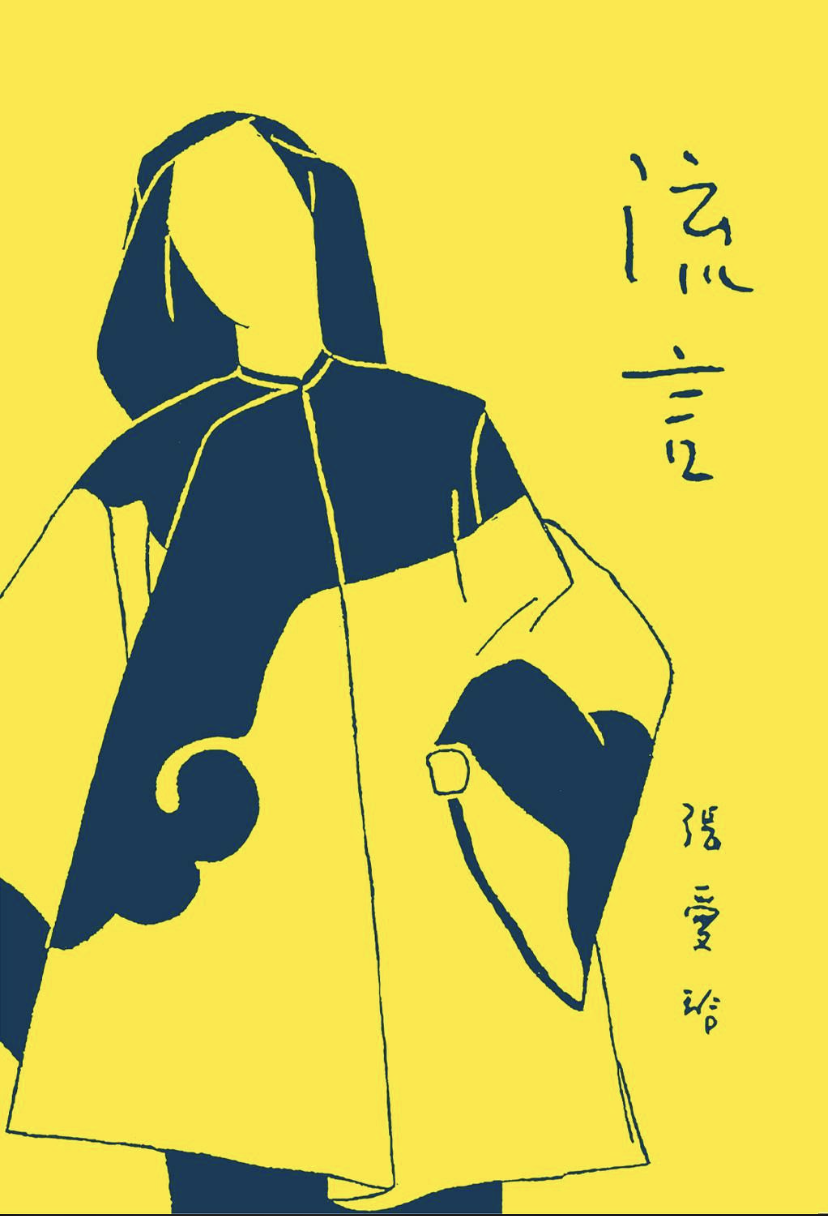
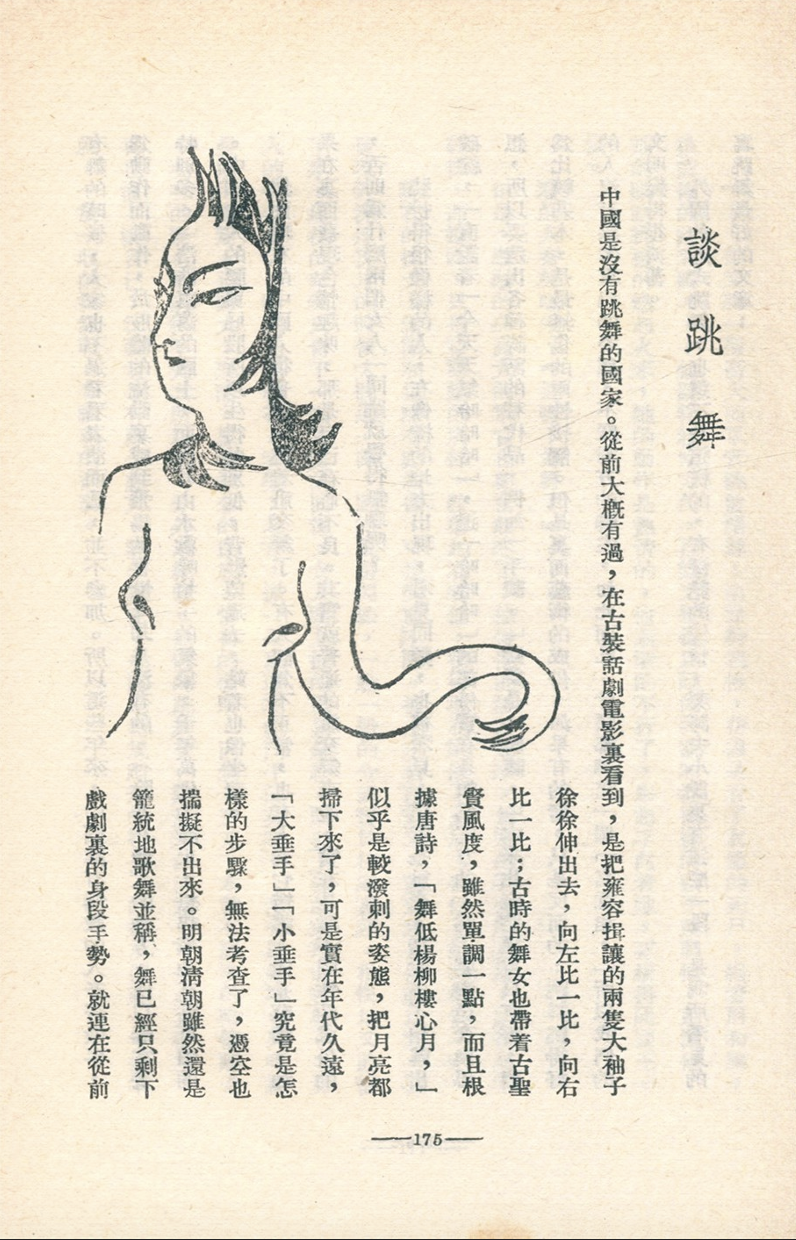
The cover of Rumors, her first collection of essays, published the same year, includes illustrations by her: drawings that resemble sketches, with only a few straight and curved lines. The cover was designed by her friend Yan Ying (炎樱).
The Shanghai newspaper The Paper offers a fascinating account of the 2021 republication process for two of her books.
Thirty years ago in Shanghai, on a night of full moon… Perhaps we have not seen the moon of thirty years ago. Young people imagine it as a small, reddish-yellow, moist halo, like a tear on a piece of paper—old and blurred.
Older people remember the moon of thirty years ago as joyful, larger, rounder, and whiter than today’s moon; yet, looking back on thirty years of hardship, even the finest moonlight carries a touch of melancholy.
The Golden Cangue, 1943.
Translation note
This English version was translated with AI assistance and reviewed by the author.