CAUCE 01
The material dimension of painting
On working with papers, pigments, and the thought of painting.
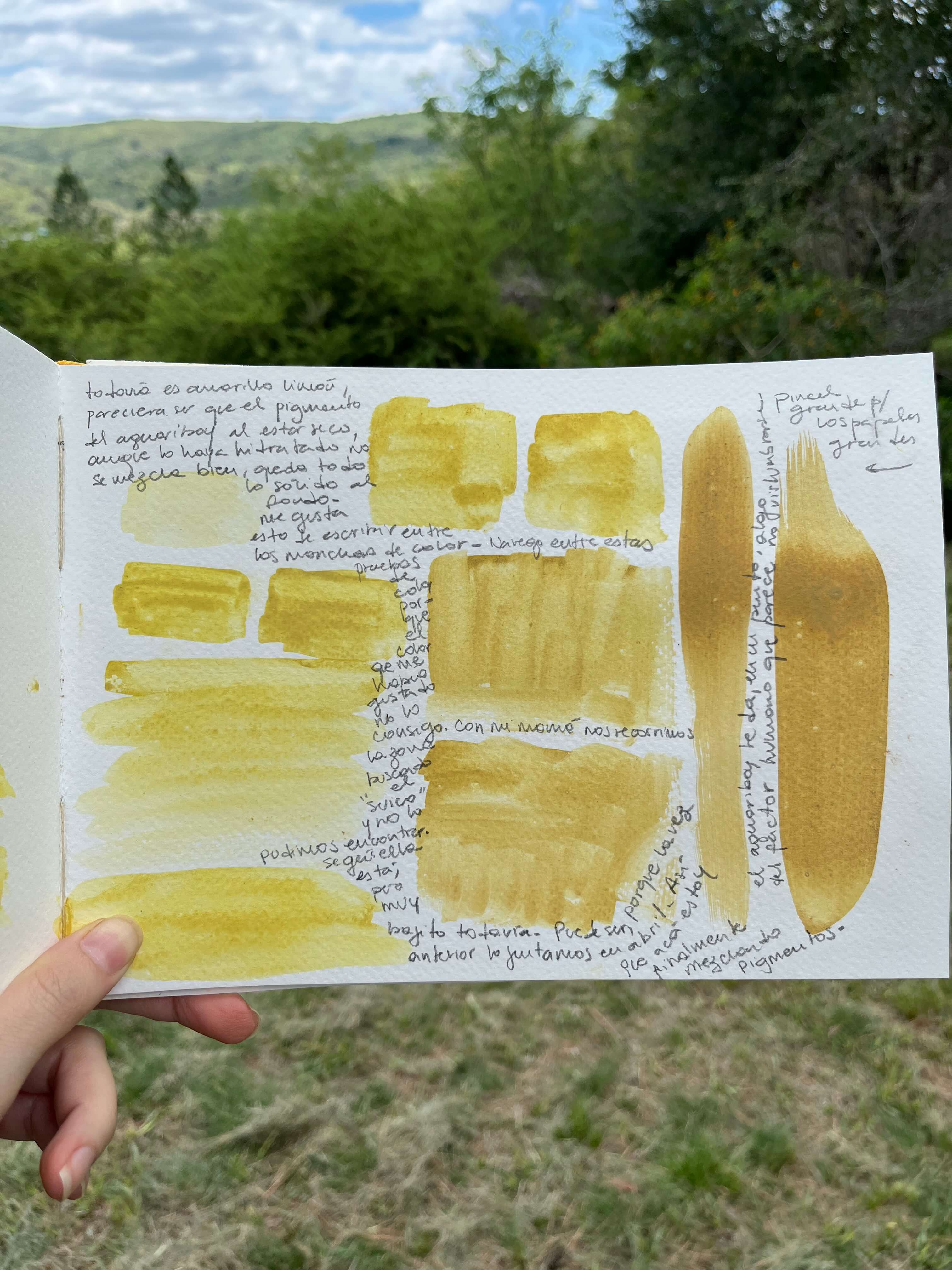
The intimate territory of materials is nothing other than a “dimension of thought” in the play of aesthetic possibilities that bind matter and idea (Siracusano, 2008).
The first project I approached while thinking intentionally about material was La creciente. The use of coal introduced a new layer of meaning into the work. I presented it at the beginning of 2020 and, months later, in September, the river turned black when the flood carried ashes from the fires in the hills. The work kept gathering new resonances.
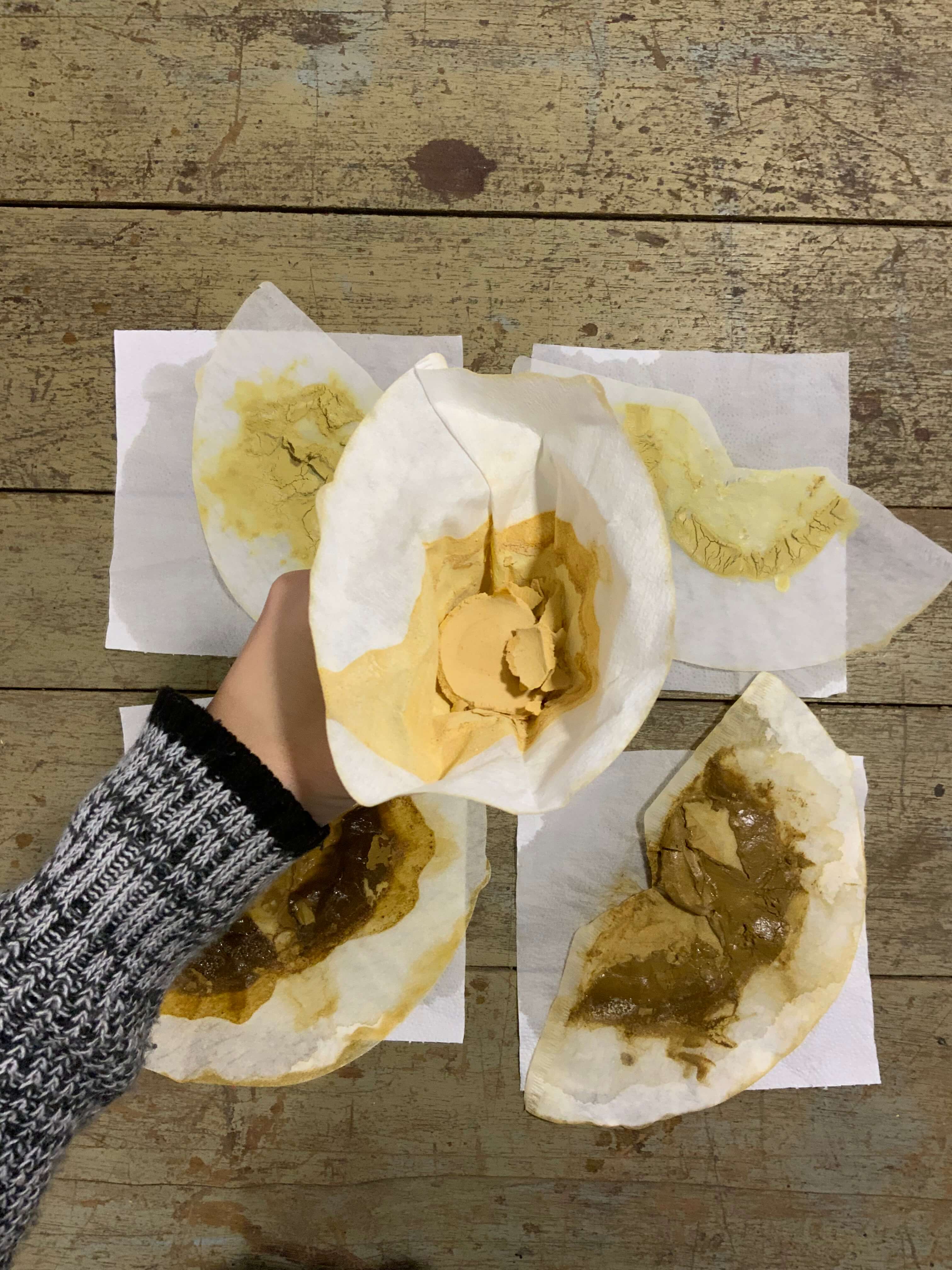
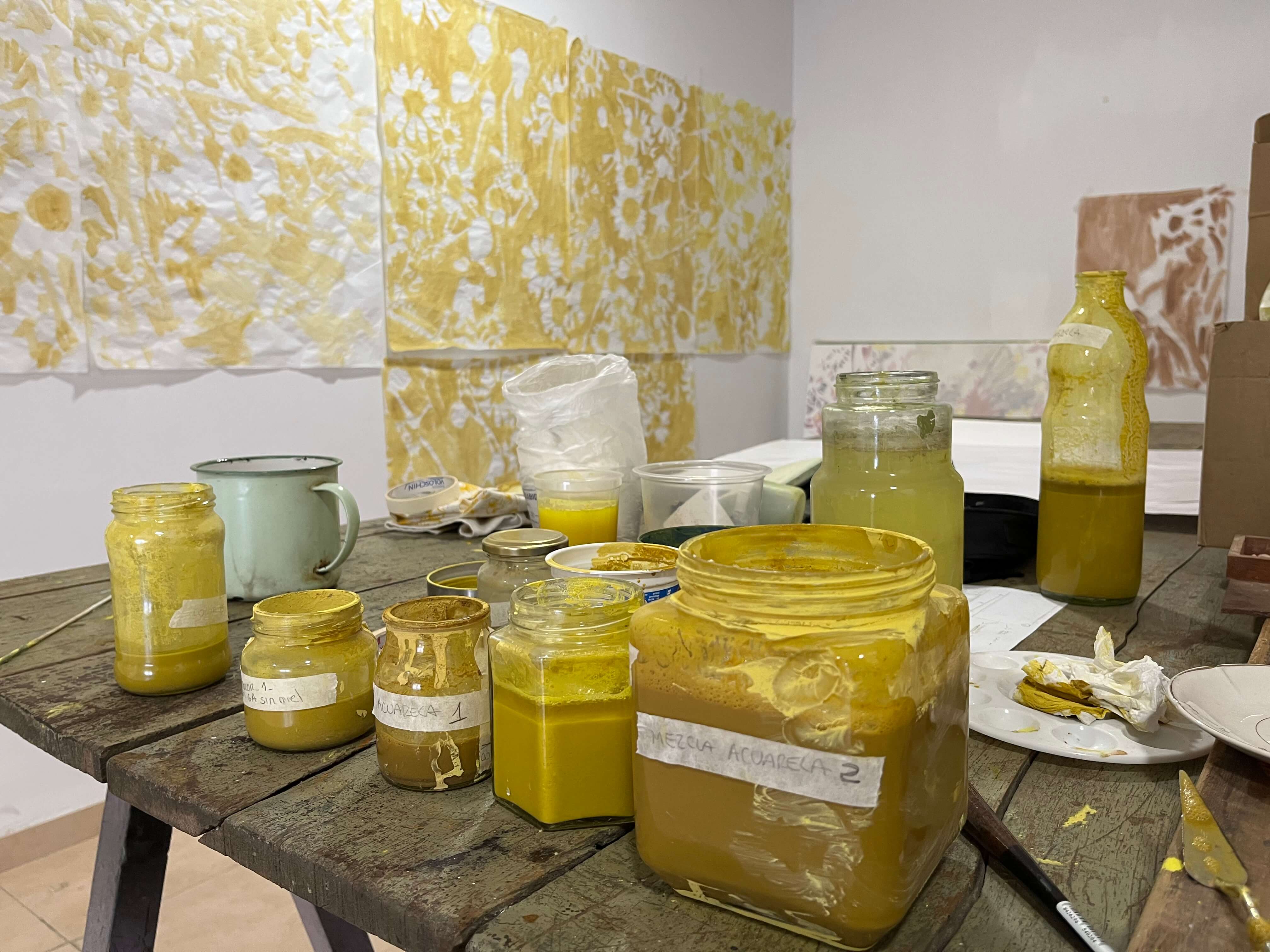
Some time ago I began reading about obtaining pigments from plants. I watched my mother, a weaver, extract colour from different plant materials to dye her yarns. My concern was mainly to work with colour again. I gathered different wild plants, carquejilla, suico, goldenrod, and the bark of different trees, aguaribay, tala, espinillo and molle, from which I obtained different colours that can be seen in the notebook. With these pigments I first began making chalks. It is a matter of taking the pigment and, without any other filler, shaping it with water and letting it dry. Because it is also a dry material, it called for a gesture similar to charcoal and carbon pencil, with which I made some drawings, among them El aguaribay.
After experimenting with chalks, I decided to move on to preparing watercolour, thinking of making some paintings outdoors. I learned to prepare it in larger quantities during a restoration internship at the Teatro San Martín (2018), since all the interventions on walls and ceilings were done with water-based paint, mild and easy to remove.
We also made an incursion into the chair of Techniques and Materials in Painting in my first year at university, where I later worked as a teaching assistant for two more years. With all this information, along with other readings in books and on the internet, I began working a little outdoors, a little in the kitchen, and another part in the studio, with a notebook acting as a hinge between all these comings and goings.
Las superficies donde las cosas suceden
If I look at my previous work, in the exhibitions or projects I have made, watercolour always seems to accompany oil or acrylic painting. The oils are exhibited large on the walls, while the watercolours are small and appear in notebooks or on papers placed in a display case or on a table. That is why it seemed like a good idea this time to reverse those roles and place watercolour elsewhere.
My decisions for this stage were guided by the main premise of maintaining an experimental attitude. At first I also considered the option of intervening directly on the wall with chalk, but for logistical reasons I discarded it. This led me to decide to work with watercolour on paper, in a medium format, and to build an installation-painting based on the accumulation of modules.
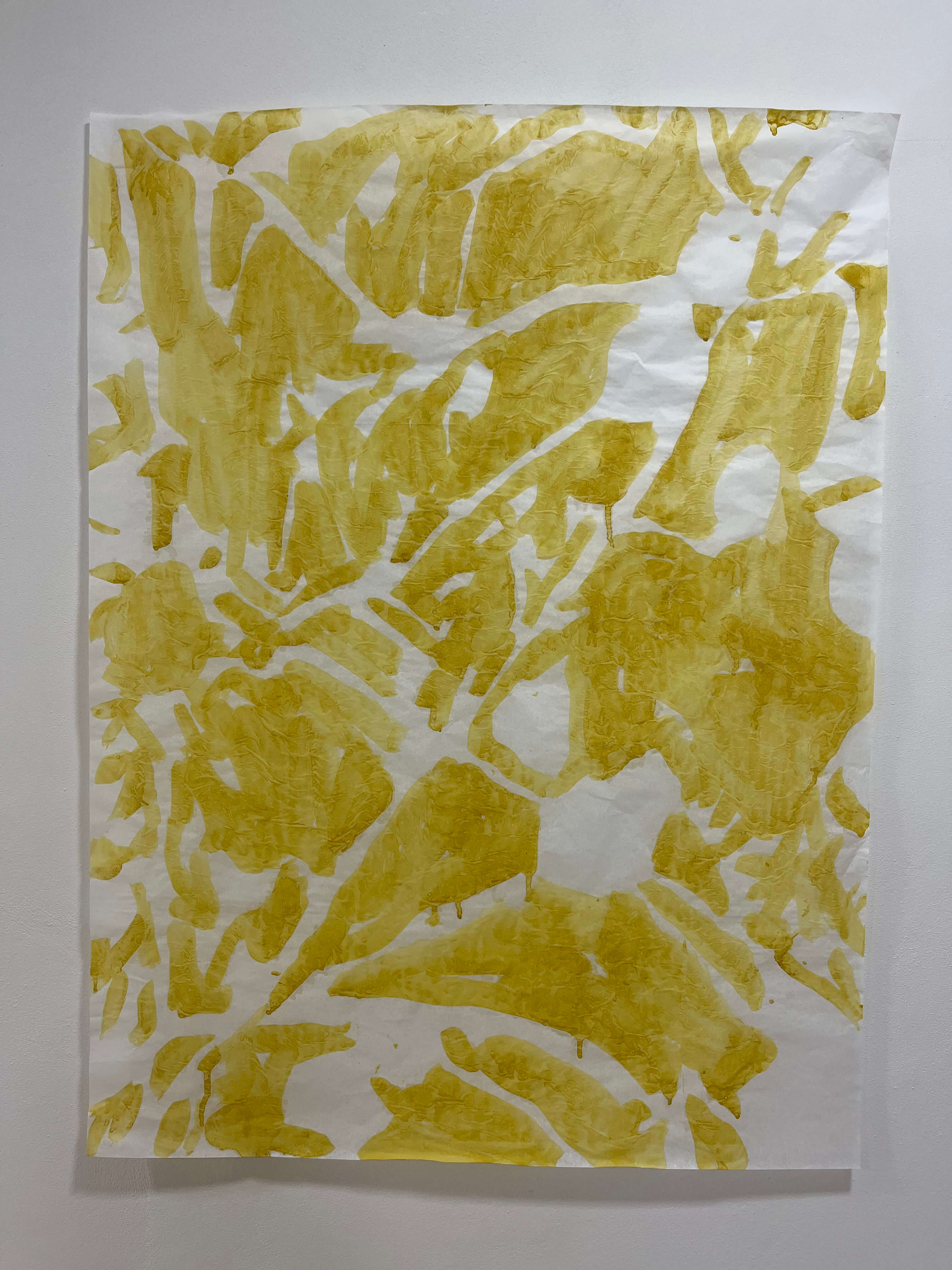
My enthusiasm for choosing watercolour as a pictorial matter also had to do with the affinity I feel with the fluid stroke enabled by the material itself: water.
Making my own paint led me to think about the accumulation of material as an action. Gathering raw matter in order to produce pigments is a practice I incorporate into taking photographs and painting outdoors. It becomes another way of accumulating information, always in quantity. At the same time, this procedure gave me the possibility of opening toward the environment, allowing nature, in a certain way, to make its own decisions. Nature offered me its forms and gestures, but also its colours. It was one of the central stages that made me delve more deeply into what the language of painting could imply beyond pure visual image. Into the power of the material vehicle.
“An image becomes effective when its own materiality not only accompanies but also constructs meaning. If, as Michel Foucault insisted, no statement can be given without the presence of a voice, of a surface, without becoming a body in a sensible element and without leaving a trace in a space or, at the very least, in a memory” (Siracusano, 2008).
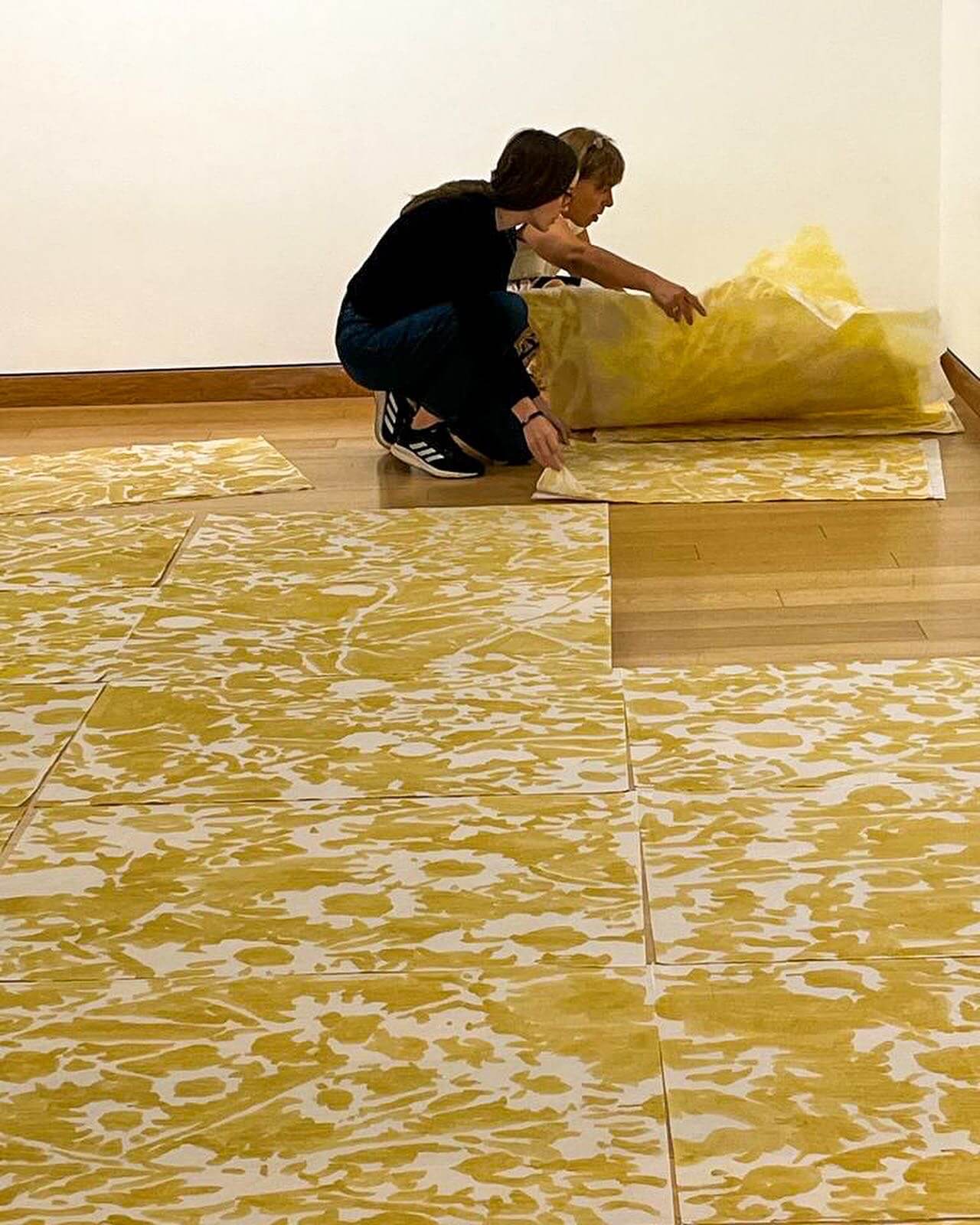
In the final work, the watercolour on paper does not hide its essential condition nor seek to create an illusion; surface and space are built through its presence. The work stands halfway between the “instead of” an image and “being and existing” as matter (Siracusano, 2008), in that oscillation between becoming narrative and becoming pure form.
At first my doubts had to do with the work’s durability, with making something so large that it would later fail to sustain itself over time, escaping the stretcher and working with a paint I would prepare myself, without additives or preservatives, on a paper that was not special for watercolour, neither heavyweight, nor cotton, nor acid-free, in short, with none of the expected characteristics for watercolour paper or for an “optimal” painting. Suddenly I wondered whether that even interested me at this moment.
I thought that, as it was to a large extent an experimental proposal, some aspect would necessarily be lost, but I hoped to find something. In many senses it was a liberating decision: the work became lighter and more fluid, both materially and in process.
The chosen paper is tissue paper: very thin and semi-transparent, it marks and wrinkles, and must be handled with great delicacy. Using this paper made the first imprint become significant: the brushstroke turned into a trace. On this paper the water does not absorb or run, so there is no possibility of retouching the stroke once made. Working in this way allowed me to push watercolour in its simplicity or complexity, depending on how one looks at it. The lightness of the watercolour and the paper builds the space with an atmosphere of certain fragility.
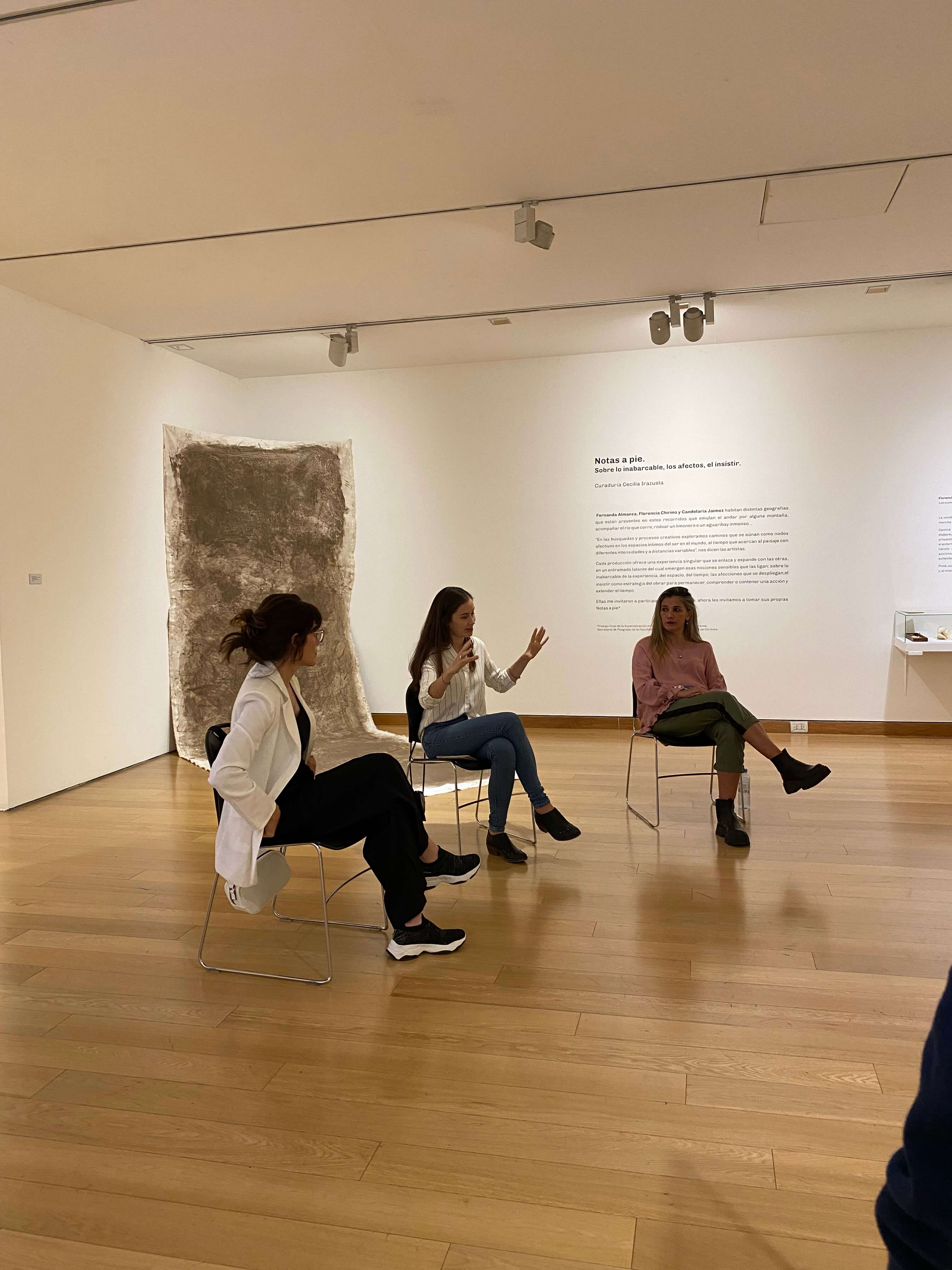
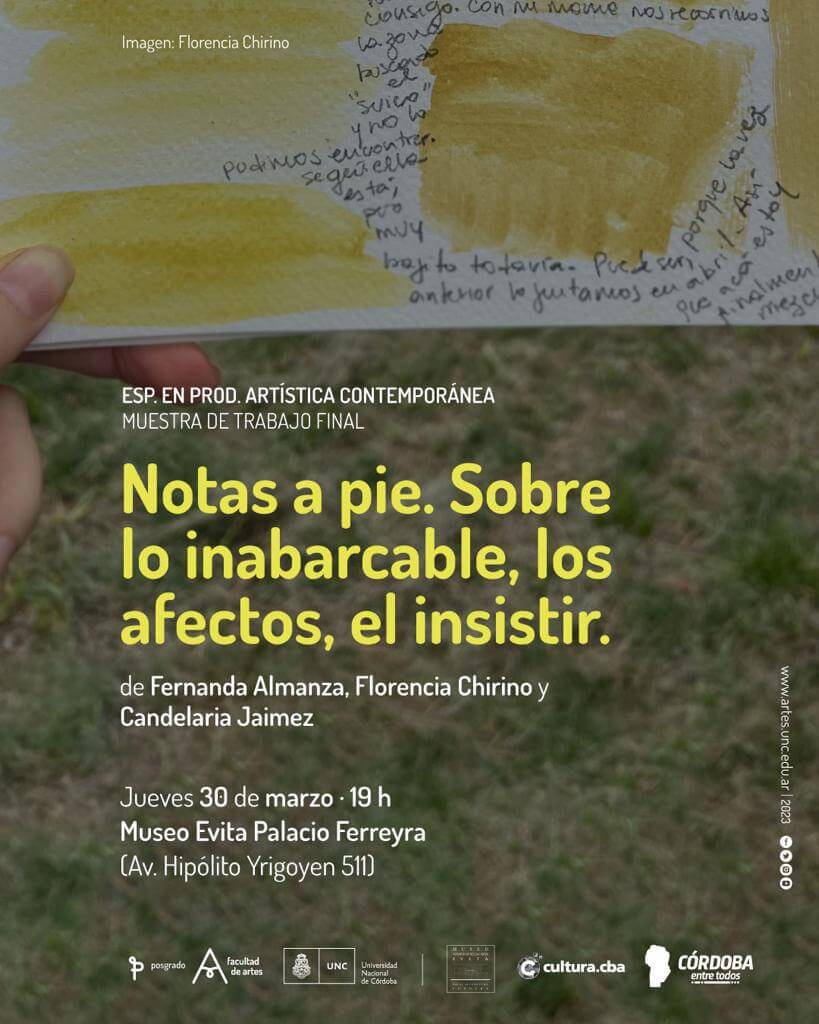
Notas a Pie exhibition, Museo Evita, Palacio Ferreyra
On Thursday the 30th at 7 pm, Museo Evita opened the exhibition Sobre lo inabarcable, los afectos, el insistir, a group show featuring Candelaria Jaimez, Florencia Chirino and Fernanda Almanza, curated by Cecilia Irazusta.
The proposal is made up of three individual projects developed while sharing processes and ideas over the course of two years. From different geographical points, these dialogues with the environment take on diverse forms and materialities, all of them initially emerging from the act of walking, moving through a natural space and connecting with it.
As a kind of sensitive cartography, studies and notebooks, paintings, drawings, video, installations and text are presented. The artists worked from a small hamlet near a village in the hills, a river running a few kilometres from the city, and a lemon tree in some courtyard in another city. These are personal, intimate spaces that enable experiences of which we are all a part and that address us as actors and inhabitants of a shared land.
On-site talk at the Notas a Pie exhibition
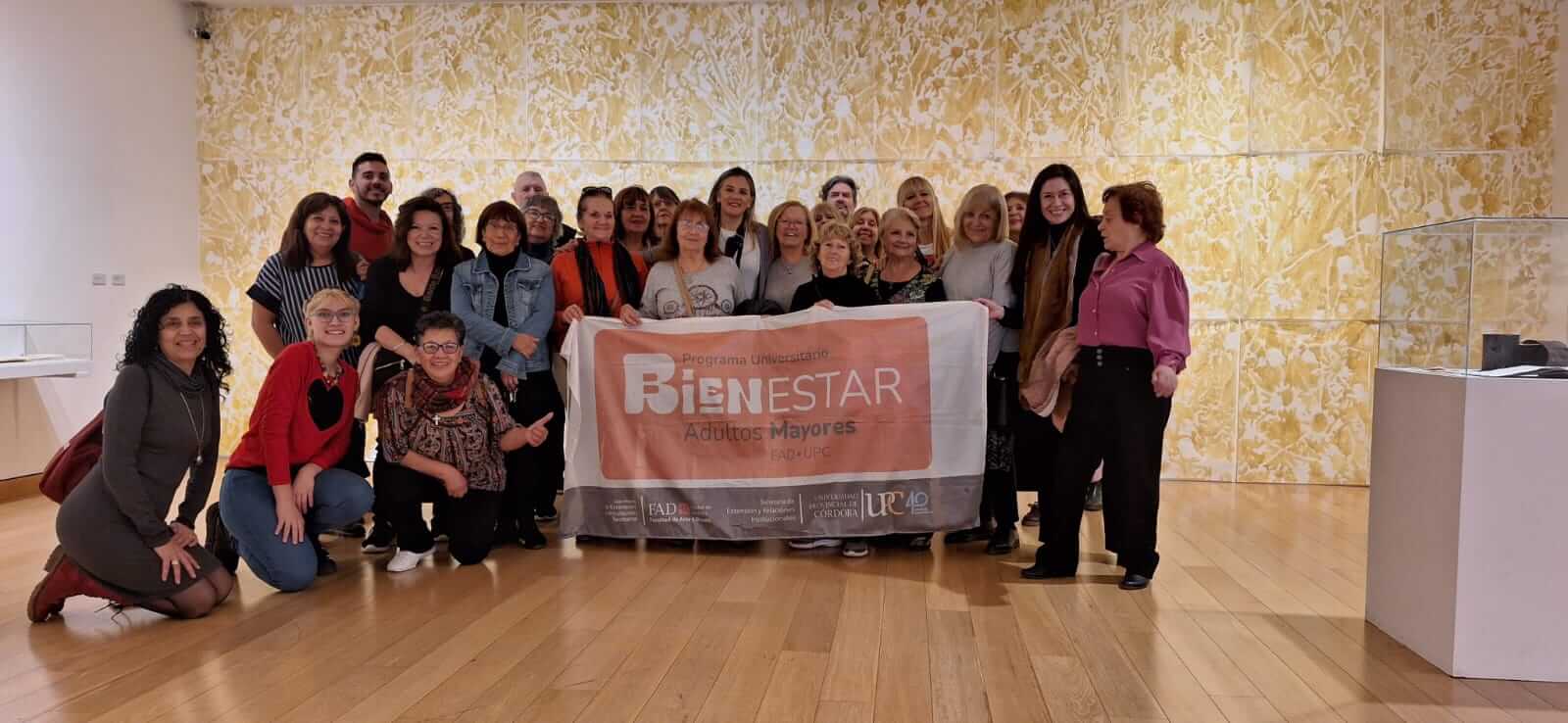
On May 31, 2023, I had the opportunity to participate in a talk for the Wellbeing Program for Older Adults at FAD UPC, within the framework of the Notas a Pie exhibition, where works by Fernanda Almanza and Candelaria Jaimez were shown under the curatorship of Cecilia Irazusta.
During this talk, I presented my work Las superficies donde las cosas suceden , a project that explores the relationship between architectural space and painting. I also discussed the work with natural pigments, obtained directly from the environment, and reflected on how these materials contribute to a deep dialogue with space.
This work does not limit itself to the traditional boundaries of the frame and the stretcher; instead it extends and interacts with the environment through multiple paths.
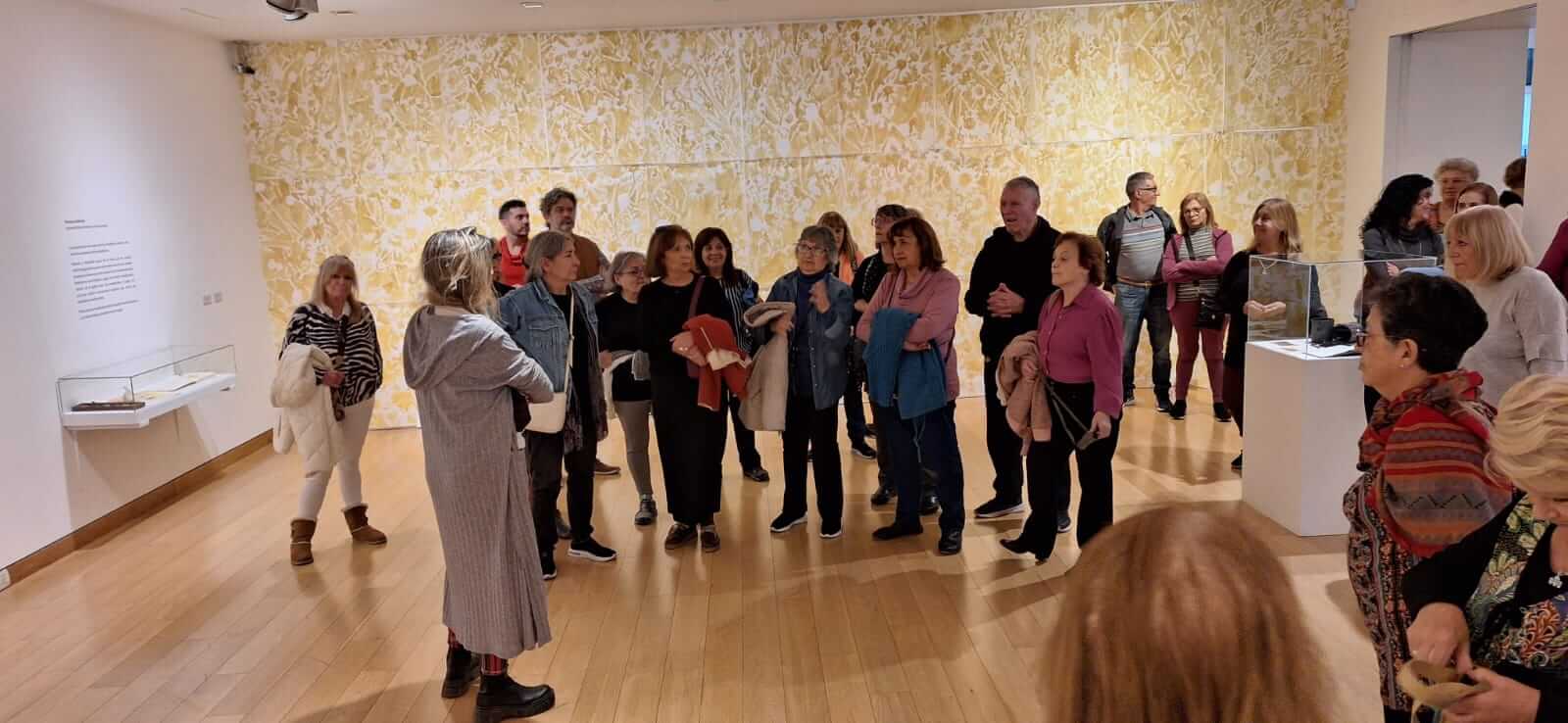
Materiality and painting in space
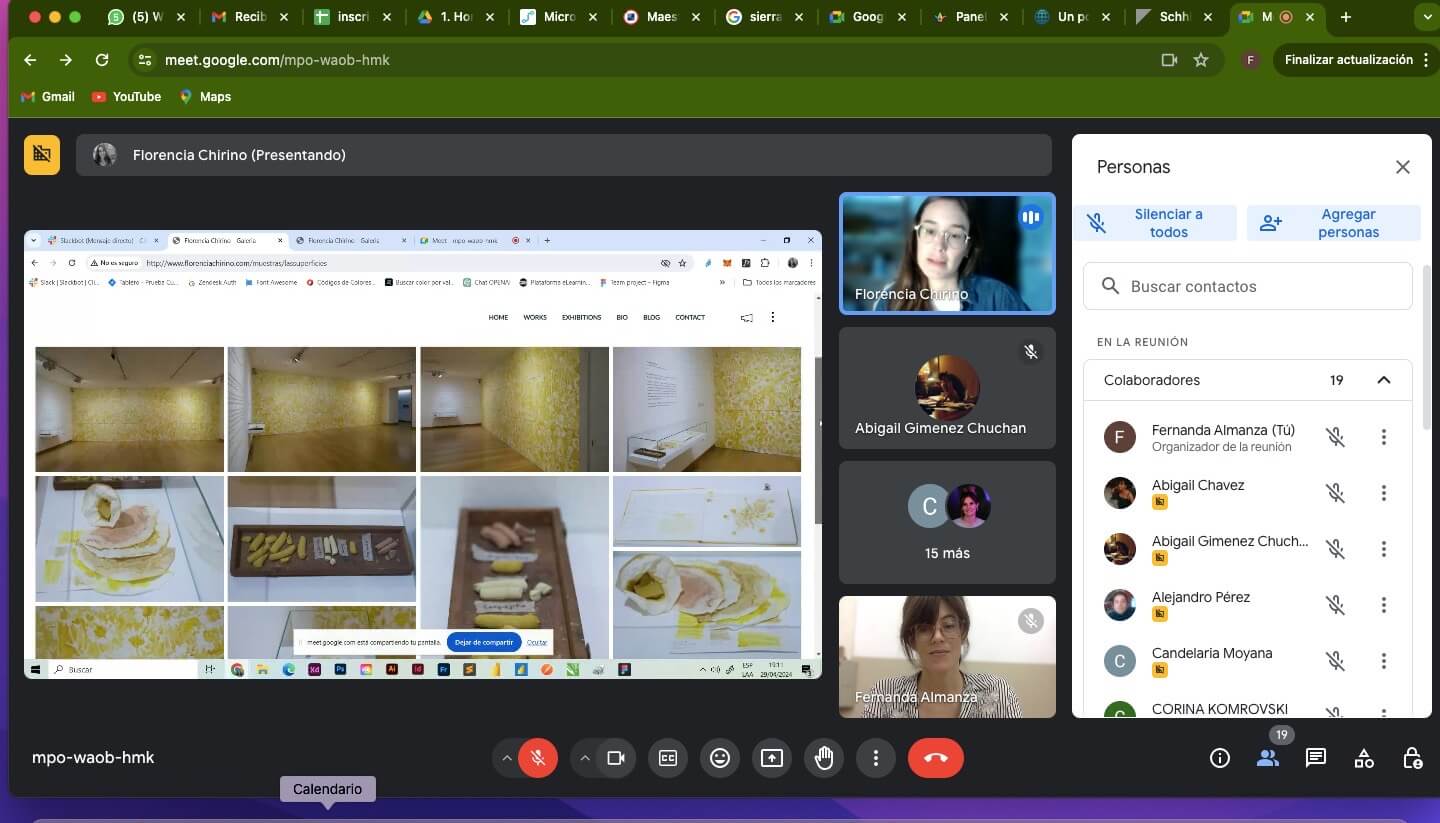
On April 29, I had the opportunity to take part as a lecturer in the training course “Sensitive cartographies: contemporary artistic strategies and a possible register of the environment” at the Teacher Training Institute of Villa Mercedes.
During the talk, I shared my experience and approach in the work Las superficies donde las cosas suceden , where I addressed the process of working with natural pigments obtained directly from the environment, and how these materials contribute to a deep dialogue with space and, later through installation, with architecture and the site where the painting was placed.
It was a valuable space for exchanging ideas about the relationship between the environment, materiality, and contemporary artistic practice.